

What should a Sydney patient check before accepting an Invisalign quote? Two questions deserve an early answer: what treatment does the price cover, and what will the patient actually pay? A useful comparison starts with the proposed treatment and its inclusions, followed by any payment or rebate conditions.
For someone searching for Invisalign cost in Sydney, seven checks can structure that comparison. These are questions to put against a written quote, rather than a ranking of seven proven price drivers. They cover the scope of the figure, included items, aligner count, complexity, appliance alternatives, instalments and rebates.
1. Is the figure a personal quote or a general range?
The first check is what the advertised number represents. Is it a starting price, a national estimate or a written fee for the patient's proposed treatment? Those descriptions should not be treated as interchangeable.
A patient comparing two offers can first record the wording beside each figure. Does either specify a particular treatment plan? Does it identify when the quote expires? If the advertisement gives a broad range, the next question is which figure applies to the individual assessment.
The practical request is straightforward: ask for a dated quote identifying the proposed treatment and total fee. Keep the advertisement alongside it so that any difference between the headline figure and the personal quote can be discussed.
2. What does the quoted fee include?
Before comparing totals, patients can ask each provider to identify the same categories. A checklist might include assessment, records, aligners, review appointments, refinements, replacement trays and retainers. Asking about these items does not presume that any particular provider charges separately for them.
For each category, request one of three answers: included, excluded or subject to an additional charge under stated circumstances. If an additional charge could apply, ask how it would be calculated and when approval would be sought.
Consider a hypothetical comparison between two quotes with different totals. Before choosing either, list their inclusions side by side. The unresolved decision is whether both figures describe the same scope of care, rather than simply which number is smaller.
3. How does aligner count enter the price?
When comparing Invisalign quotes in Sydney, ask how the planned number of aligners and treatment complexity affect the proposed fee. In its homepage FAQ, Totalcare Dental and Dermal states an Australia-wide Invisalign range of $6,000 to $12,000, depending on those two factors. This is an Australian range, rather than a Sydney average or an individual treatment quote. Ask how each factor applies to your assessment and what assumptions about aligner count underpin your quoted price.
For aligner count, request the planned number and ask how the quote handles a change to that plan. Does the stated fee cover a defined series, and what would trigger a revised price?
The FAQ's explanation does not establish a price per aligner. Dividing either end of the range by an assumed tray count would therefore create an unsupported calculation. The useful comparison is the count and fee actually stated in each proposal.
4. What does treatment complexity mean for this quote?
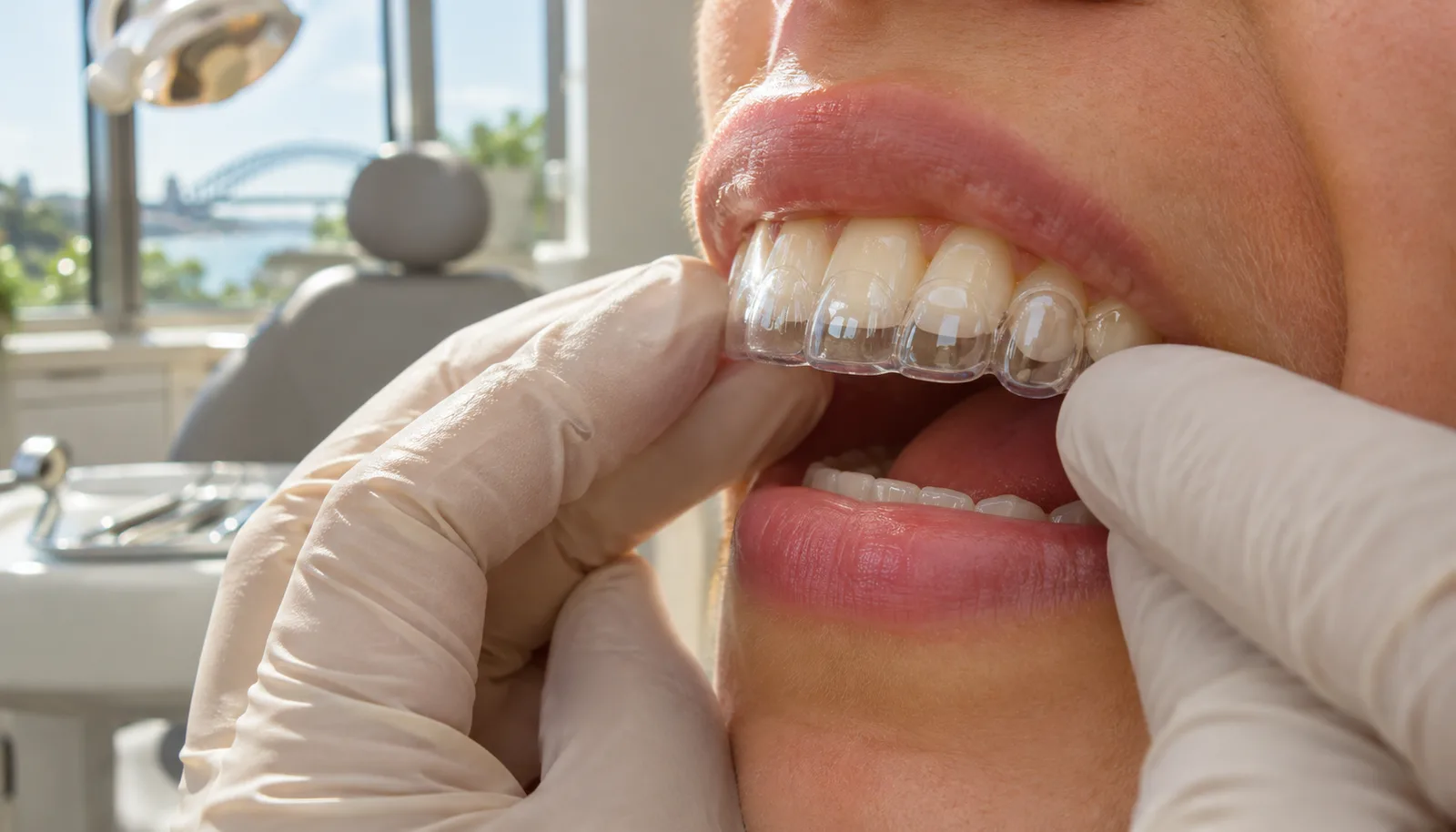
The same FAQ names complexity as a factor, but its price sentence does not assign particular fees to mild, moderate or complex treatment. A complexity label alone therefore cannot place an individual case at a particular point within that advertised range.
Patients can ask the treating practitioner to explain what the label means in their proposed plan. Which aspects of the assessment inform the fee? What assumptions does the quote make, and what change would require a new estimate?
A hypothetical description such as “minor adjustment” should not be converted into a promised low price. The written proposal should connect the assessed treatment needs to the quoted amount. That also gives the patient something specific to compare when another assessment uses different terminology.
5. Is an appliance comparison based on equivalent proposals?
The clinic's FAQ also gives Australia-wide ranges of $5,900 to $12,000 for metal braces and $6,500 to $12,500 for ceramic braces. These are the clinic's published comparisons, rather than personalised offers for a Sydney patient.
The ranges overlap. Their starting figures alone cannot establish which option would have the lower quoted fee for an individual case. Patients interested in alternatives can ask which options the practitioner considers appropriate and request their respective treatment proposals.
The FAQ attributes an Invisalign premium to custom-fabricated thermoplastic aligners and digital treatment planning. It does not assign separate dollar amounts to those elements. A patient seeking that breakdown should request it rather than infer it from the overall range.
6. What are the instalment terms and total repayments?
The homepage describes instalment arrangements through Klarna, Afterpay and Zip Money as interest-free. Before relying on that description, patients can request the applicable agreement and check the deposit, repayment schedule, total repayments and conditions attached to the offer.
A useful comparison records both the treatment fee and the proposed payments. Ask whether the scheduled payments add up to the quoted fee, whether any other charges apply and what happens if a payment is missed. These are questions for the specific agreement, rather than assumptions about a named payment provider.
For advertised discounts or inducements, the Dental Board of Australia (Ahpra) states that the offer's terms and conditions must also be stated. It also says regulated health-service advertising must not be false, misleading or deceptive. Patients can ask for the written conditions alongside any advertised offer.
7. What contribution has actually been confirmed?
The clinic's FAQ mentions private health insurance rebates without specifying a fund or rebate amount. Patients should ask their insurer to confirm any contribution for the proposed treatment, using the treatment details supplied with the quote.
Record the quoted fee and any confirmed contribution separately. Ask what conditions apply and whether the confirmation covers the proposed treatment in full or only particular items. Until an amount is confirmed, leave it unresolved in the comparison rather than subtracting an assumed rebate.
Before accepting a proposal, check that the written documents answer three final questions: what treatment is included, what could change the price, and what amount remains payable under the confirmed payment and rebate terms?